The Art Factory: Armenia’s Answer to Andy Warhol
Just a few miles outside of Yerevan proper, along the sometimes-dusty Ashtarak Highway that leads to Armenia’s second largest city Gyumri, right before reaching the gated community of Vahakni, rises a colorful mysterious four-story building known simply as The Art Factory. A large painted rock sculpture stands guard in front of the building. Combined with the gravel driveway and swirling graffiti-like paint on the building itself, the center gives off the feel of an intriguing moonscape. The brainchild of brother and sister team Nina and Shant Hovnanian, The Art Factory serves as a modern multipurpose “artclave” of sorts, wedged between the Vahakni Country Club and the residential real estate development itself. Started by their father, the late Vahakn Hovnanian, today the development numbers some 800 houses with plans to build a large adjacent Smart City in the works. As for The Art Factory itself, it pays homage to Andy Warhol’s Factory, which attracted New York’s demimonde and art elite from 1963 to 1987, when it officially closed. The Factory produced much of Warhol‘s work, which was then sold along with its own ideology—the founder of Pop Art once famously quipped that “Art is what you can get away with.”
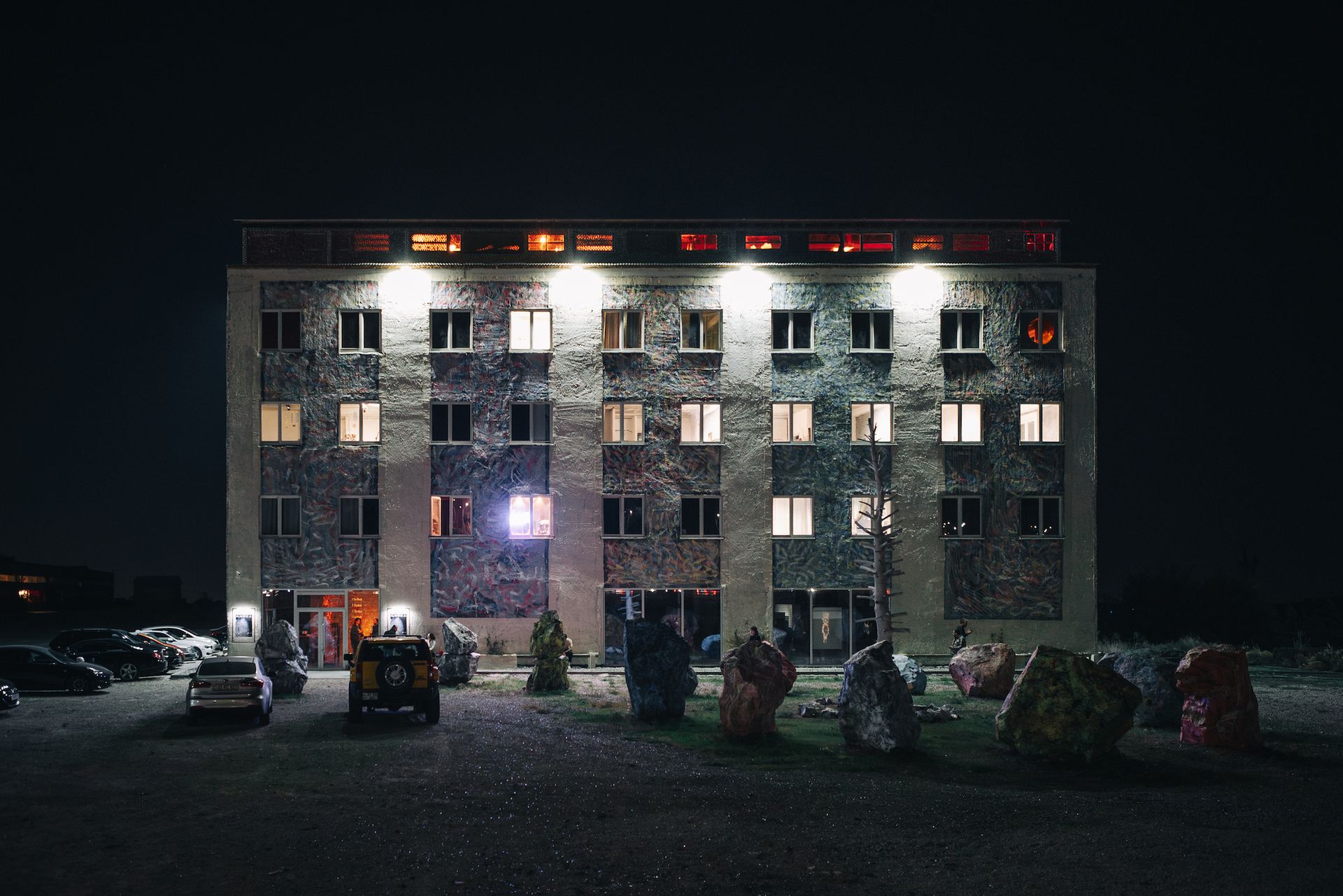
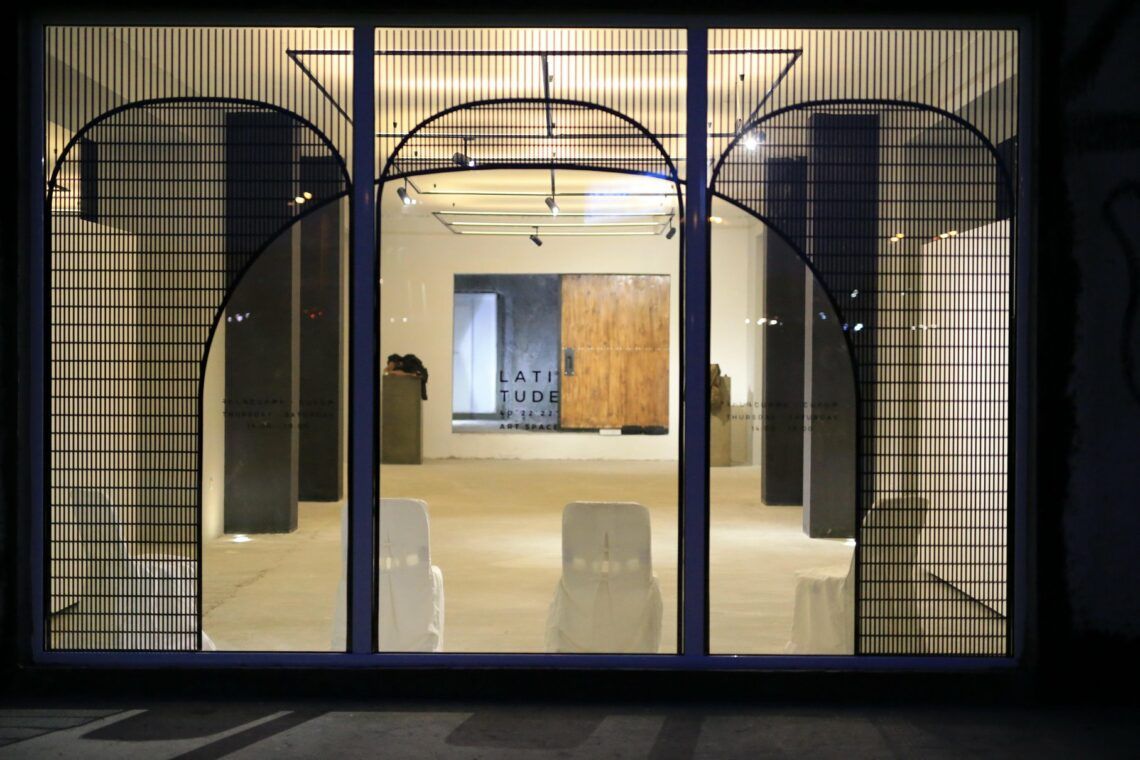
The Art Factory is designed to nurture culture and creativity, with each floor housing a different art-related endeavor. Fabio Lenzi, the dashing Italian in charge of several of these undertakings, explains: “The different parts of the building are meant to meld, invite art happenings and serve as a place where artists, writers and everyday people interact.” The ground floor of the building houses Latitude Art Space, an area dedicated to exhibitions, residencies, and various programs. The second through fourth floors house studios where artists of all types including photographers and painters, as well as jewelry and fashion designers, practice their craft. I stayed in one of the studios for a few weeks the last time I was in Yerevan and several times ended up in conversation with neighbors who shared their interest in art with me over a glass of brandy or their favorite wine. On one occasion, I was indebted to a fellow renter who knew how to jigger the sliding wood entrance door to my place, so that it would open—just like the old days in Soho! Take the elevator at The Art Factory to the fourth and top floor and the doors open out onto The Beach, a lively bar and café where resident artists and guests can connect, host events, or simply enjoy an evening together. The Beach is a popular destination for young well-heeled Yerevanites on a date or night out. And it’s covered in sand—just like a real beach. The nighttime views are among the most spectacular in Yerevan, as one can see Turkey and much of Armenia in the distance.
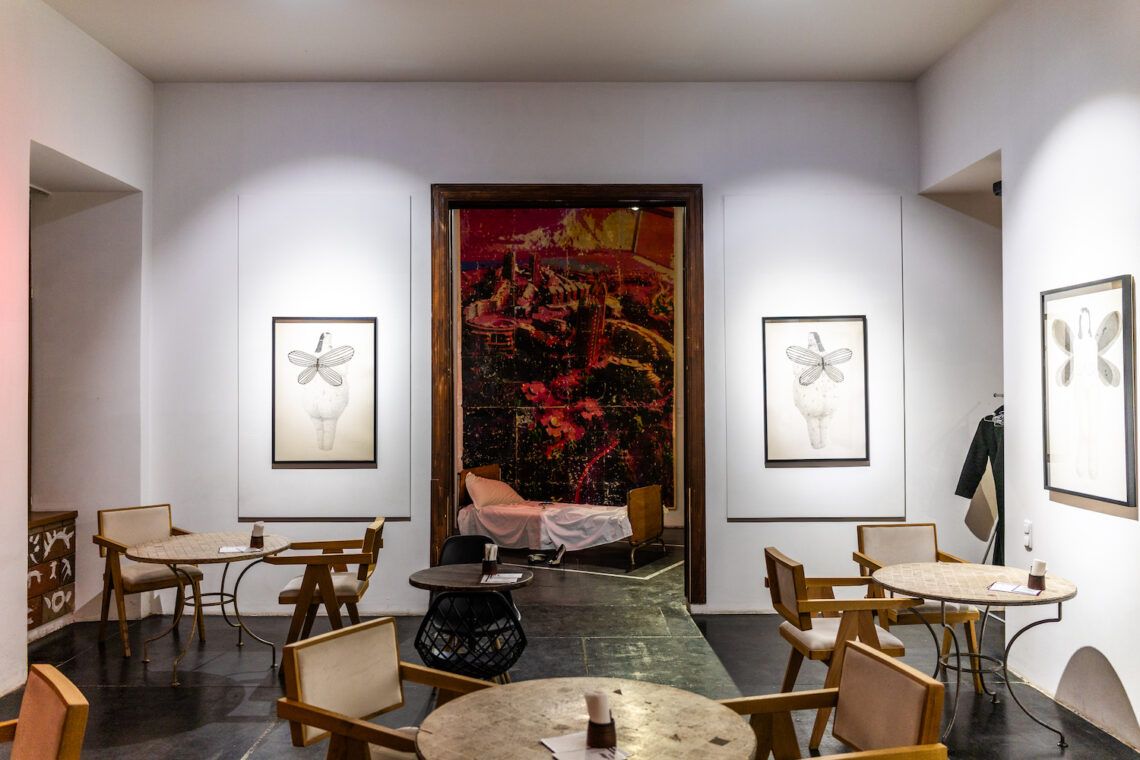
The heart of this complex, Latitude Art Space, has in the past showcased a wide range of talent. On any given day, you can take in a new art show or peek in on a fashion shoot or another exciting art-related happening. Some of the most interesting events that I’ve caught include a runway show by Yerevan designer Carutsel and a fantastically “other” exhibition by the wonderfully transgressive photographer Sirin Anoush in September 2023, titled “Chiarosuro: Inner and Outer Observations.” Other recent exhibitions have included Sam Saghatelyan’s “The Hero and the Feminine”, which depicted war heroes returning from the Nagorno-Karabakh war. It explored the pivotal role of women in those turbulent times, creating a moving narrative on resilience and strength. And Spanish artist Andrés Lozano spent several weeks as a 2023-2024 resident artist at The Art Factory. Lenzi highlights some of the other artists who have shown their work at Latitude: “These range from Sveta Gas, whose performance art explored the archetypal hero’s journey, to Armen Hakobjanyan’s breathtaking mountain landscapes, and David Galstyan’s 2023 Nebula, which presented alchemical images through scanned photography. And the clever artist Garegin bridged the world of street art and gallery exhibitions, blurring the boundaries of contemporary art.” Latitude Art Space has also served as a cultural hub and space for refugees from Nagorno Karabakh, showcasing art that speaks to both personal and collective experiences. As Nina Hovnanian notes: “Its future promises continued diversity, innovation, and meaningful dialogue through the arts.”
Latitude has also helped to place Yerevan on the world art map by hosting the first ever Yerevan Art Biennale in 2019. The biennale revolved around the theme The Time Complex and was curated by another Italian, Lorenzo Fusi. Nina Hovnanian explains that COVID-19 temporarily disrupted more ambitious plans for the Biennale: “Although initially planned as a physical exhibition, it transitioned to a digital format due to the pandemic, hosting over 45international artists and garnering positive reactions despite the virtual pivot.” As Shant Hovnanian avers, the umbrella Yerevan Biennale Art Foundation (YBAF) oversees The Art Factory Art Studios, Latitude Art Space, and A1 Art Space, a quiet meeting place and gallery on Abovyan Street steps away from Republic Square: “While each venue hosts distinct programs, they share a unified mission under the guidance of the YBAF team. They work collectively to foster cultural dialogue and artistic development.”
Given the fact that Lenzi is Italian in upbringing and heritage, I was curious what he makes of Yerevan and its art scene, which is little-known outside of Armenia: “It’s dynamic and it offers everything from underground modern art to historic monuments, blending classical and contemporary influences.” Lenzi continues: “The National Gallery and independent galleries provide platforms for a wide range of artists, including those previously underrepresented. The influx of international artists is enriching local dialogue and there are many workshops and exhibits that promote cross-cultural exchange.” As curator Choghakate Kazarian recently explained in another Artspeak column however, local art professionals sometimes ignore global trends or pay scant attention to accepted curatorial standards, though this too is changing as Armenia progresses. The Hovnanians concur: “The scene could benefit from enhanced educational and licensing programs to bring certain aspects up to international standards.”
To understand the uphill battle that YBAF and other leading arts organizations face, one must first reckon with the dearth of serious collectors in Armenia. As Lenzi explains: “It’s difficult to pinpoint exactly, but I’d say that there are probably a dozen or so serious art buyers in Armenia, though there are probably many more, less visible ones. The latter include a mix of locals, tourists, diasporans, and some foreign buyers, mainly Russians.” All told, that’s not a whole lot of people, and according to Lenzi they operate in somewhat piecemeal fashion: “The lack of an established, formal collectors’ community, as seen in other countries, makes it challenging to engage with these individuals on a broader scale. It also makes outreach and market growth more complex.”
But the brother and sister duo share a vision with other art workers and established curators such as Tamar Hovsepian, who all have in mind the creation of a world art market in Armenia. They hope to build on collectors such as the late Gerard Cafesjian who established the splendid Cafesjian Museum at the centrally located Cascade Monument in central Yerevan, and Aso Tavitian who recently bequeathed a priceless collection to the Clark Art Institute in Massachusetts. The art market in Armenia proper has historically been seen as more of a cultural and expressive outlet that reflects the country’s eternal themes of resilience and survival. The entire idea of art as a commodity is only now beginning to infiltrate the mindset of both artists and buyers. When asked what can be done to develop the art market, Lenzi is clearheaded: “Developing art sales platforms, organizing local auctions, and fostering a collectors’ network to facilitate connections between artists and buyers—these things would all be beneficial. Additionally, educational programs about the art business could help artists and galleries build sustainable financial models and lay the groundwork for a more vibrant market in Armenia.”
As someone born in Italy, Lenzi appreciates the opportunity to work in Armenia developing its post-Soviet cultural and art scene: “Working in Yerevan’s art scene is a rewarding experience, especially as we try to bring together local and international artists.” Nina Hovnanian is quick to add: “Residencies, exhibitions, workshops, and events such as the Yerevan Biennale are key to this culture; Yerevan can establish itself as a hub for global artistic dialogue and continue to grow its art market and cultural footprint.” The Hovnanians envision the next Yerevan Biennale to take place in 2026 and are already hard at work raising funds to make it an international success. Supporting the upcoming Yerevan Biennales should be in the interest of all art lovers, as well as those with the foresight to realize that culture is the ultimate weapon in today’s ongoing cultural conflicts.
Art is many things. It presents unique aesthetic experiences and translates the human experience like nothing else, save perhaps writing. Art also provides an important way of affirming one’s cultural relevance, and in Armenia’s case, its millennial presence in the South Caucasus. Rome wasn’t built in a day, but as locals are quick to remind you, Yerevan just celebrated its 2806th anniversary, making it technically older than the Italian capital. So, friends, Romans and countrymen lend me your ears: the Hovnanians and their team at Yerevan’s Art Factory intend to help turn Yerevan into a cultural beacon. It’s already a vibrant hub where you can relax, take in some art or as Andy Warhol would have touted, become famous for 15 minutes.
Source: EVN Report
By: Christopher Atamian